

 한국어
 日本語
Where is Nho Que River located? This is one of the most frequently asked questions among international travelers when searching for Vietnam tour packages. This magnificent jade-green river, gracefully winding its way beneath the legendary Ma Pi Leng Pass, boasts a truly spectacular and awe-inspiring beauty. Join us as we explore the complete and comprehensive travel guide for your journey below!
Introduction to Nho Que River
Nho Que River originates from the Nghiem Son mountain range in Yunnan Province, China. The river flows into Vietnam through the territory of Lung Cu Commune in Dong Van District.
From here, the river winds its way through the majestic karst limestone gorges, carving a breathtaking path between towering rocky peaks. The river’s waters maintain a remarkably distinctive jade-green hue throughout the year, creating one of the most mesmerizing natural spectacles in all of Vietnam. This vital waterway serves as an essential lifeline for the ethnic minority communities living in the surrounding areas. Its untouched and pristine beauty has since become one of the most iconic and celebrated tourism symbols of Ha Giang Province.
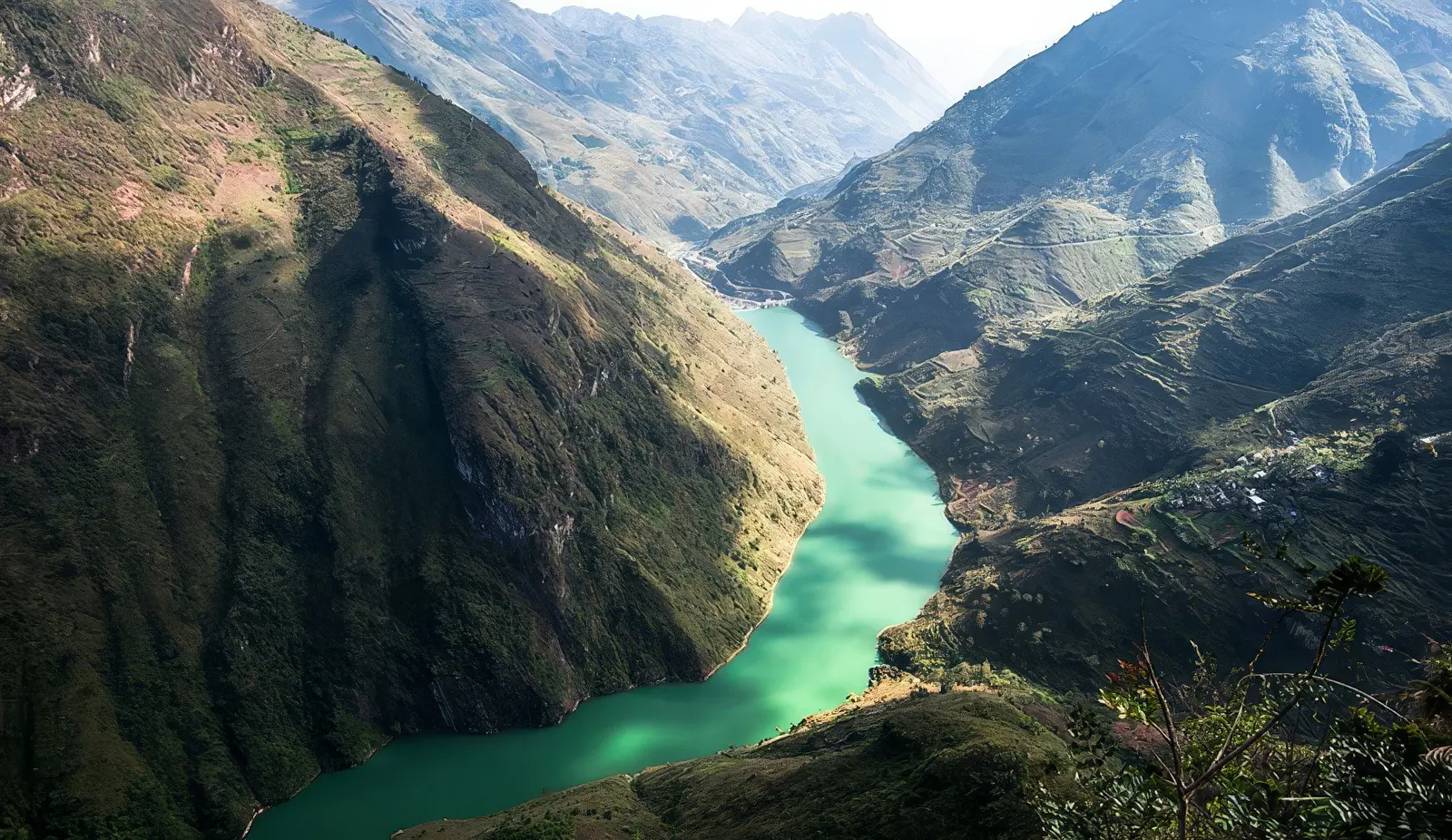
Nho Que River Winds Its Way Through the Majestic Karst Limestone Gorges and Towering Rocky Peaks
Where is Nho Que River Located?
Many international travelers often wonder about the exact location of Nho Que River. This breathtakingly beautiful river lies entirely within the heart of the Dong Van Karst Plateau Global Geopark. The most stunning and most frequently visited stretch of the river is situated at the foot of the legendary Ma Pi Leng Pass. This remarkable area falls within the administrative boundaries of both Dong Van and Meo Vac Districts. To capture the most spectacular and awe-inspiring photographs of Nho Que River, travelers should make their way along National Highway 4C. This conveniently located route also serves as an ideal gateway to connect with numerous other famous and must-visit attractions in the region.
The Best Time of Year to Explore Nho Que River
The highland climate changes distinctly with each season, offering a uniquely different and captivating beauty throughout the year. The most ideal time to visit Nho Que River in Ha Giang is from September to November. During this period, the autumn weather is pleasantly cool and rainfall is minimal. The river runs crystal clear and tranquil, beautifully mirroring the deep blue sky above.
You may also consider visiting during the spring season from February to March. This is when peach and plum blossoms burst into full and magnificent bloom along both banks of the river, painting the landscape in stunning shades of pink and white. Travelers are strongly advised to avoid visiting during the rainy and stormy season from June to August. During this time, the river water becomes considerably murkier and the roads turn dangerously slippery, posing significant safety risks for all visitors.
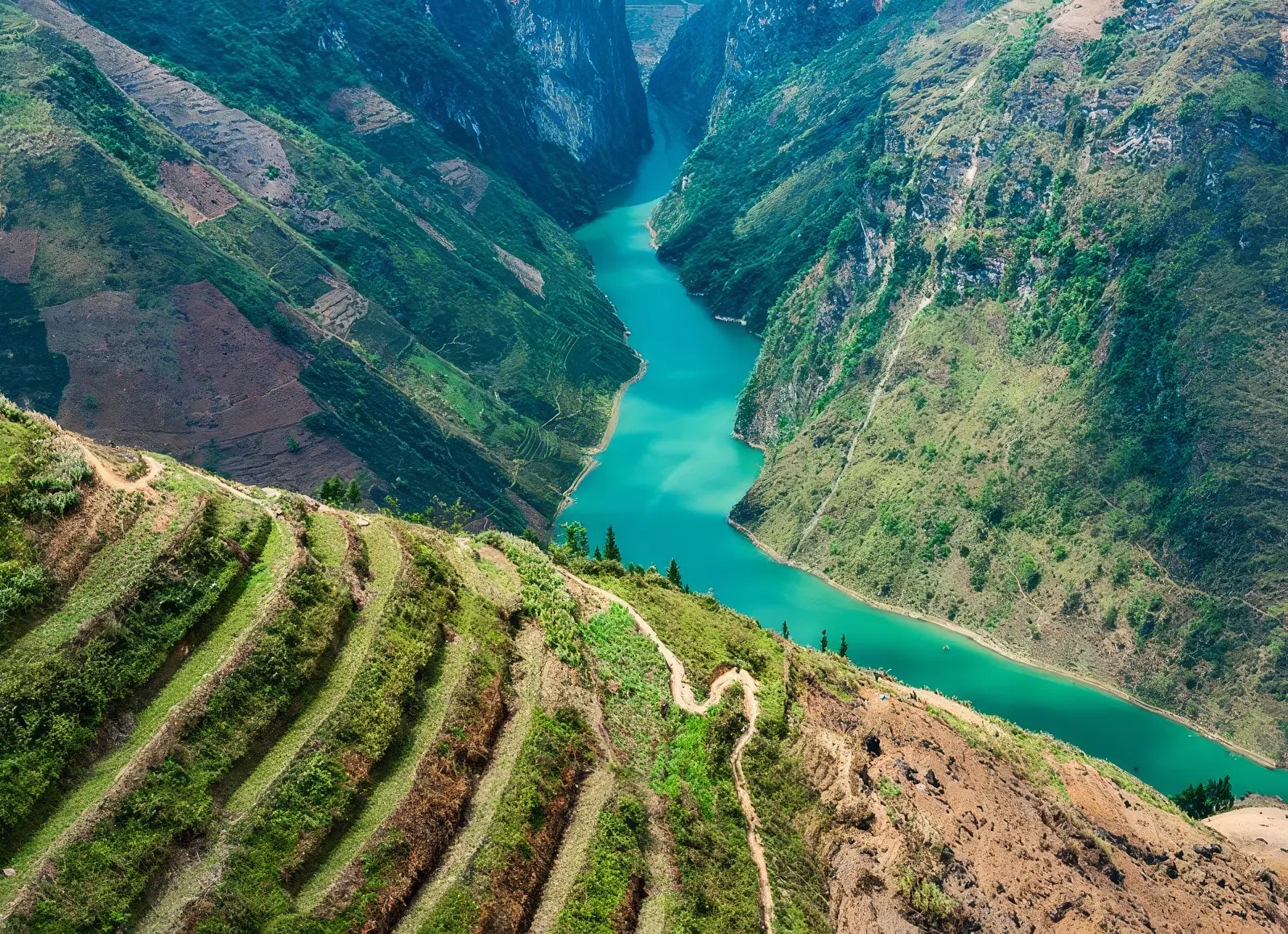
The Jade-Green Waters of Nho Que River Lie Perfectly Still, Beautifully Mirroring the Deep and Boundless Blue Sky Above
How to Get to Nho Que River – A Detailed Travel Guide
Traveling to Ha Giang from major cities requires careful and thorough planning in advance. Below is a detailed step-by-step guide for international travelers.
- From Hanoi:
- The distance from the capital Hanoi to Ha Giang is approximately 300 kilometers, with an average road travel time of 6 to 7 hours.
- Travelers can board a premium sleeper coach at My Dinh Bus Station for a comfortable overnight journey. Alternatively, hiring a private car is a popular and convenient option for larger groups.
- From Ha Giang City center, continue an additional 150 kilometers along National Highway 4C to reach Meo Vac District.
- From Ho Chi Minh City and Da Nang:
- The distance from Southern and Central Vietnam to Ha Giang is considerable. Travelers are advised to book a direct flight landing at Noi Bai International Airport in Hanoi. Flight duration is approximately 2 hours from Ho Chi Minh City and just over 1 hour from Da Nang.
- Upon arrival at Noi Bai Airport, travelers can conveniently board a sleeper coach heading directly to Ha Giang, eliminating the need to travel into the city center and saving valuable travel time.
- The Road Down to Nho Que River:
- Upon reaching Ma Pi Leng Pass, travelers will need to descend to the boat landing area along the riverbank.
- From the rest stop at the summit of the pass, ride a motorbike along a steep and winding road for approximately 8 kilometers. The route is narrow, serpentine, and features numerous sharp and challenging hairpin bends.
- For those who are not confident riding on mountain roads, hiring a local motorbike taxi is strongly recommended. They will safely and swiftly transport you all the way down to the Nho Que River boat landing with ease.
Must-Have Experiences When Visiting Nho Que River
When venturing into this magnificent and awe-inspiring land, make absolutely sure you do not miss out on the following exciting and unforgettable activities.
Cruising Along Nho Que River to Admire Tu San Canyon
Tu San Canyon has earned the remarkable title of the deepest river gorge in all of Southeast Asia. As you glide along the river by boat, you will be utterly overwhelmed by the sight of two towering and sheer rock walls rising dramatically on either side. The sensation of drifting leisurely through this breathtaking and otherworldly natural wonder is an experience that will remain etched in your memory forever.
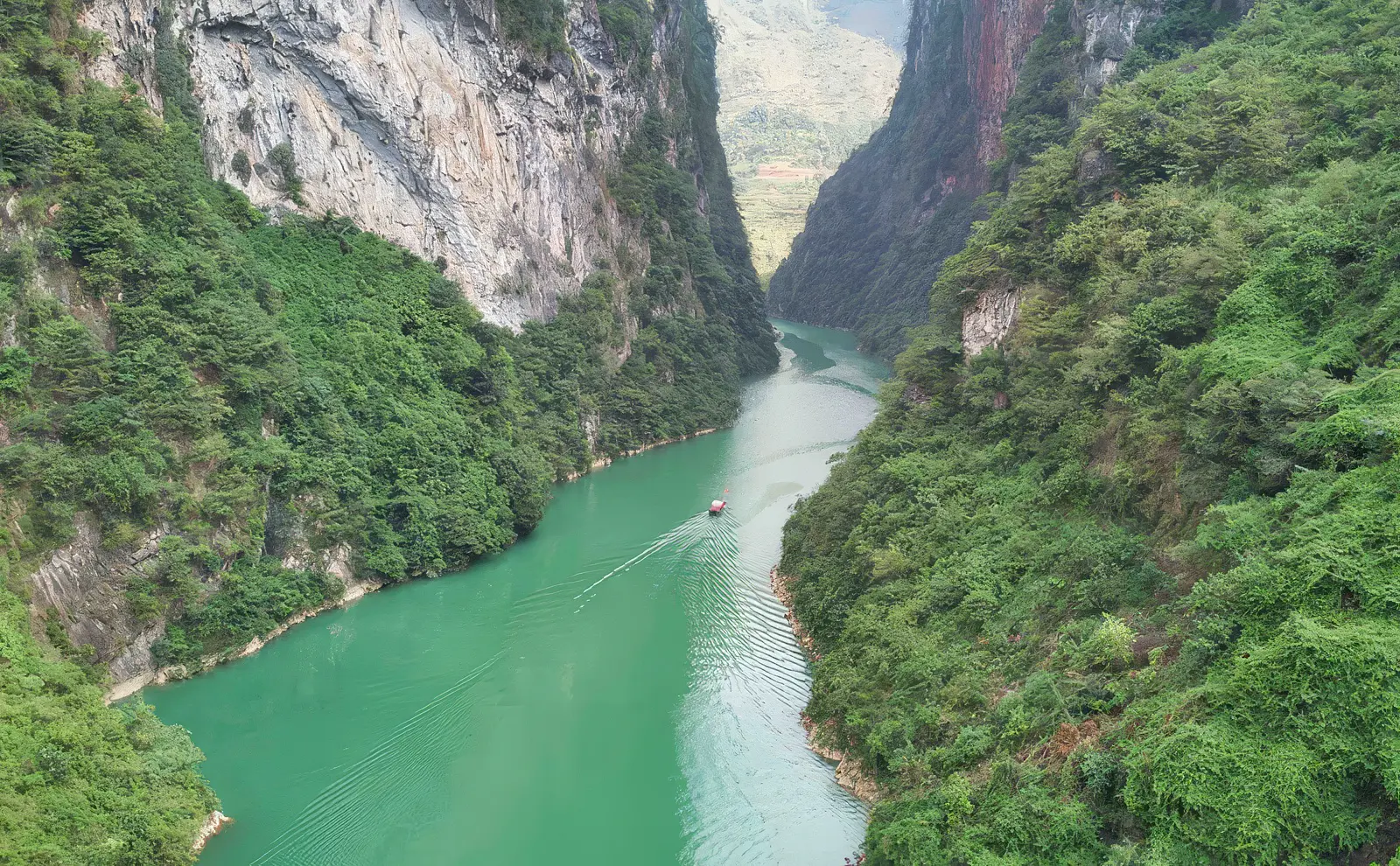
Experience the Overwhelming Grandeur of Nature as You Cruise Along Nho Que River Beneath the Majestic Tu San Canyon
Admiring the Jade-Green River from the Summit of Ma Pi Leng Pass
The summit of Ma Pi Leng Pass offers the most perfect and commanding vantage point to take in the sweeping panoramic view from above. From an elevation of 1,200 meters, the river below appears as a shimmering ribbon of jade silk, draped gracefully across the rugged mountain landscape. This is undoubtedly the most breathtaking and iconic angle for capturing truly unforgettable travel photographs and memories.
Kayaking for an Up-Close Experience of the River
For those who have a passion for water sports and outdoor adventures, kayaking along Nho Que River is an absolutely wonderful choice. You are free to paddle and navigate your kayak at your own pace through the calm and serene waters. This exhilarating activity allows you to fully immerse yourself in the refreshingly cool and crisp highland air while soaking in the stunning natural scenery from an entirely new perspective.
Camping Overnight Along the Banks of Nho Que River
The experience of camping overnight along the tranquil banks of Nho Que River offers an incredibly peaceful and soul-soothing escape from the hustle and bustle of everyday life. You can gather around a warm campfire and gaze up at a breathtaking canopy of stars blanketing the vast and silent night sky. Be sure to pack plenty of warm clothing and a thick jacket, as nighttime temperatures in the highlands can drop quite significantly after dark.
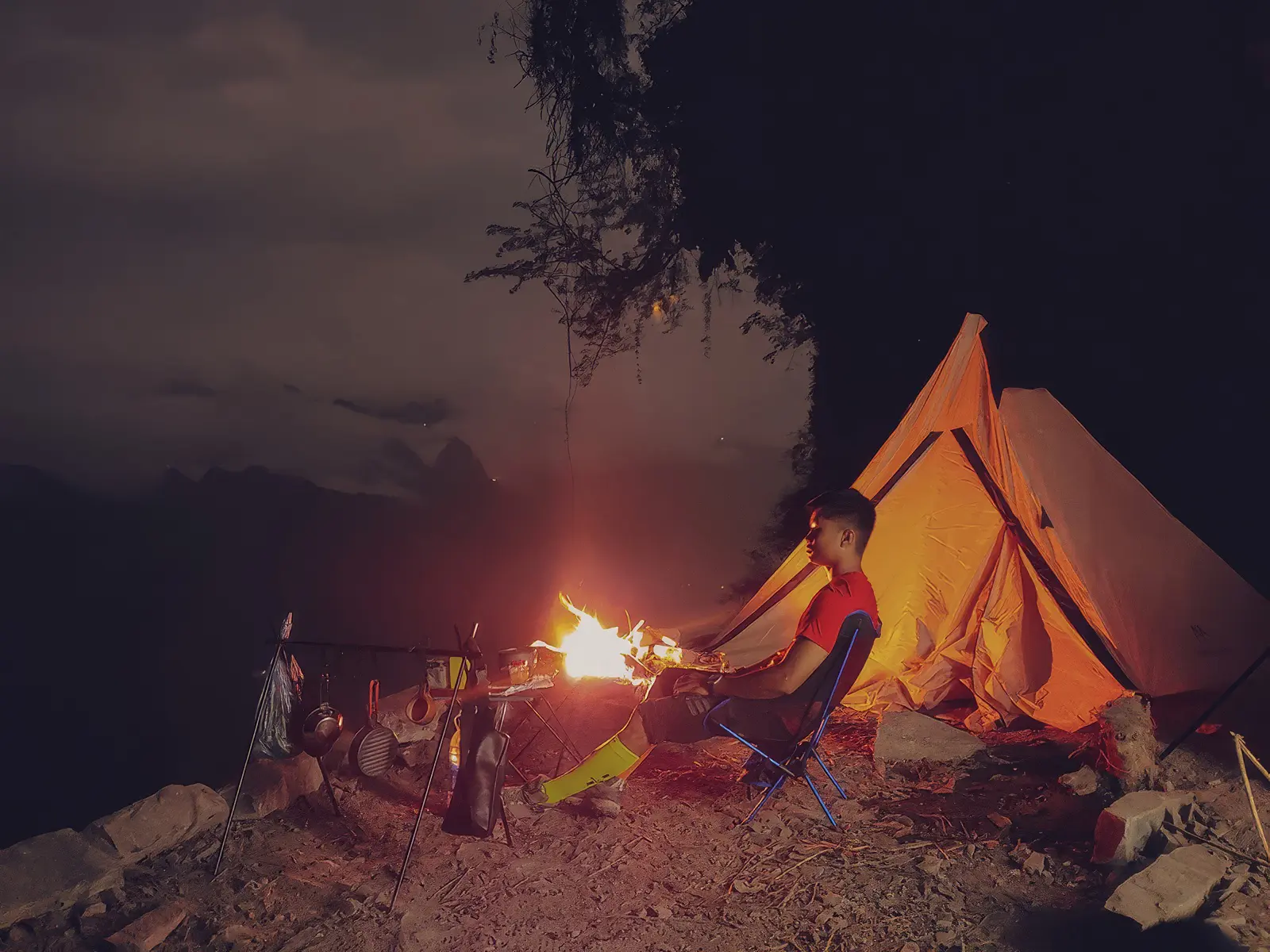
The Unforgettable Experience of Camping Overnight Along the Serene Banks of Nho Que River
Savoring the Authentic Flavors of Northeast Vietnamese Cuisine
No journey through this magnificent region would be truly complete without indulging in the rich and distinctive local cuisine. Make sure to treat your taste buds to these celebrated and iconic specialties of the Northeast:
- Khau Nhuc (Braised Pork Belly): Tender chunks of pork are slow-steamed to melt-in-your-mouth perfection, generously seasoned with a deeply rich and aromatic blend of spices, and served alongside fluffy steamed white rice for a truly satisfying and hearty meal.
- Pho Chua (Sour Noodle Soup): A refreshingly unique and delightfully tangy dish where the perfect balance of sourness and subtle sweetness creates an extraordinarily distinctive and irresistible flavor profile unlike anything you have tasted before.
- Seven-Spice Roasted Duck (Vit Quay Bay Vi): The duck skin is roasted to a gloriously golden and crispy finish, deeply infused with the rich and complex aromas of highland herbs and forest spices, creating a truly unforgettable culinary experience.
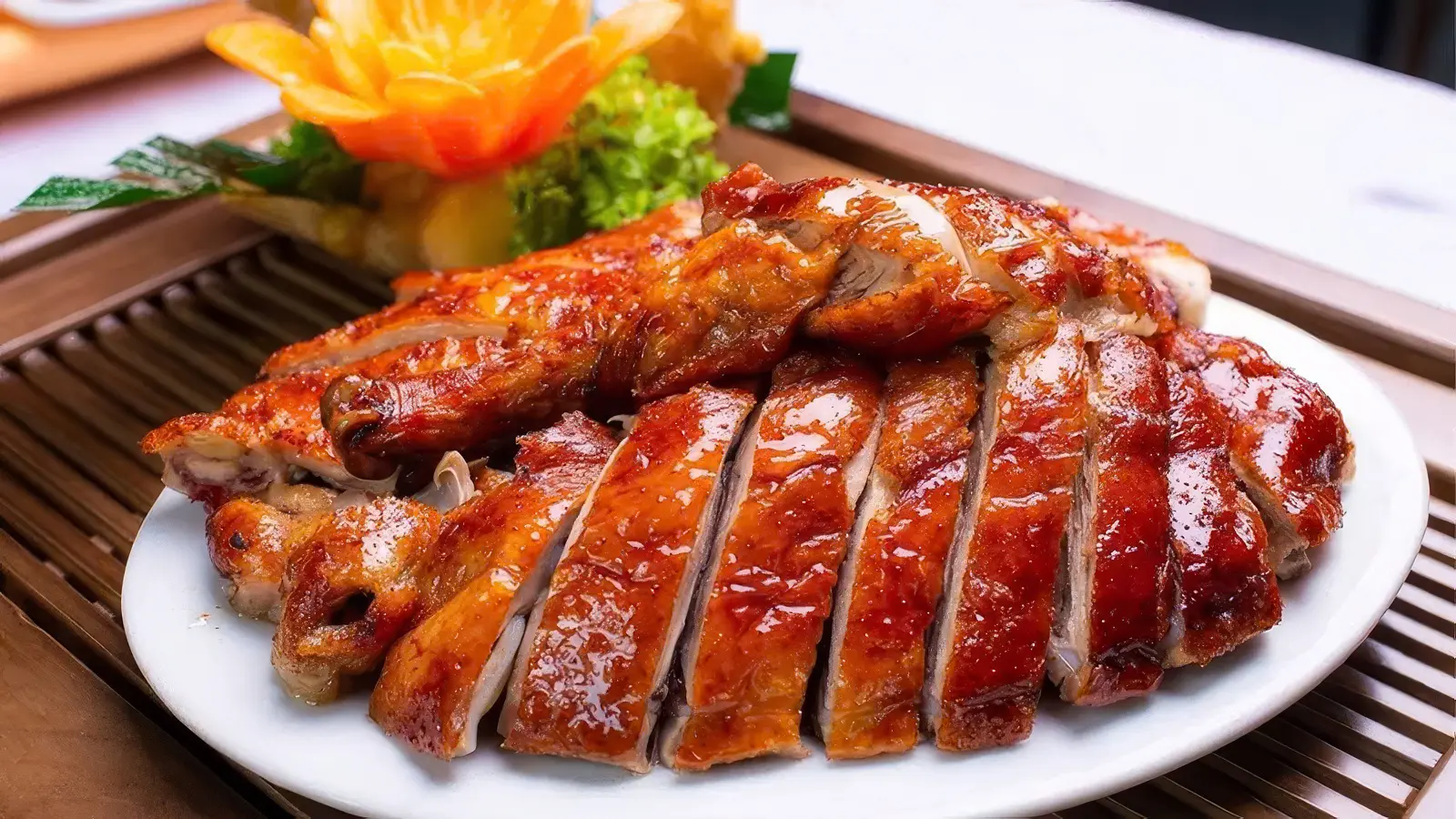
The Iconic Seven-Spice Roasted Duck – A Celebrated Culinary Specialty of Northeast Vietnam
Trying on Traditional Ethnic Costumes
Transforming yourself into a local indigenous resident is an exceptionally unique and enriching cultural experience. You can rent the vibrantly colorful traditional costumes of the H’Mong, Dao, or Lo Lo ethnic minority groups. Dressing up in these stunning traditional outfits for a photo session against the breathtaking backdrop of Nho Que River creates truly impressive and memorable keepsake photographs. International travelers are particularly captivated by the intricate and exquisite brocade patterns and embroidery that adorn these remarkable traditional garments.
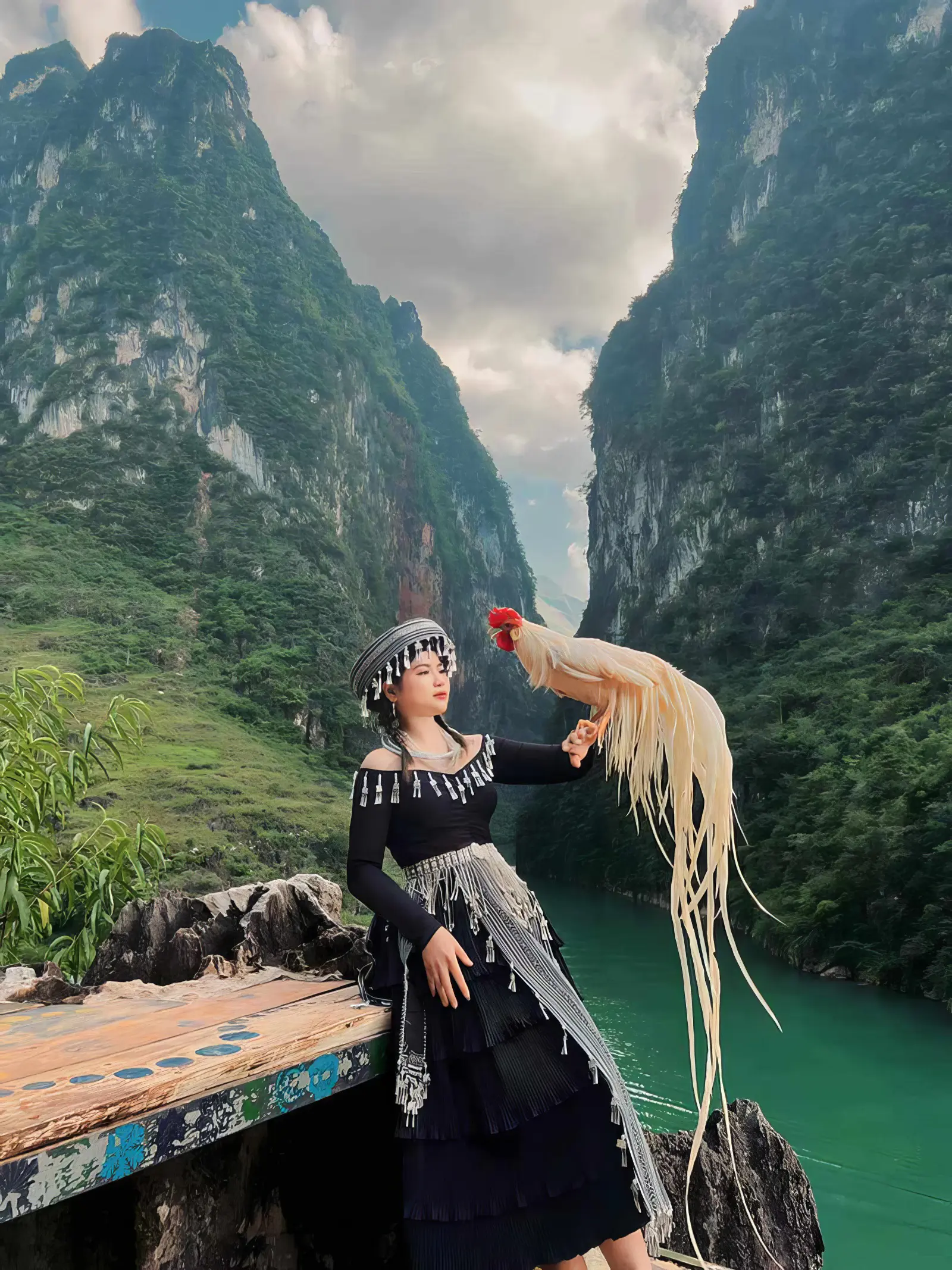
Transform Yourself into a Local and Capture Stunning Check-In Moments Along the Breathtaking Nho Que River
Estimated Budget for Your Nho Que River Trip
To help you plan and manage your finances effectively, please refer to the following basic cost breakdown for your journey:
- Boat Tour Ticket: Approximately VND 120,000 – 150,000 per person for one sightseeing round trip along the river.
- Shuttle Transfer Service to the Boat Landing: Approximately VND 50,000 – 100,000 per person. This is an optional service for travelers who prefer not to ride a motorbike down to the riverbank themselves.
- Traditional Ethnic Costume Rental: Approximately VND 50,000 – 150,000 per outfit.
- Meals and Dining: Approximately VND 100,000 – 300,000 per meal, varying depending on the restaurant and dining experience you choose.
- Accommodation: Approximately VND 200,000 – 1,000,000 per night, ranging from budget-friendly guesthouses to mid-range hotels and homestays.
Handy Tips for an Unforgettable Nho Que River Journey
To make your exploration of the magnificent Northeast region as fulfilling and seamless as possible, travelers should keep the following practical tips in mind:
- Clothing and Footwear: Prioritize wearing sports shoes with excellent grip to ensure safe and confident movement throughout the trip. The hilly terrain around the boat landing area tends to be quite steep and slippery. Remember to pack a lightweight jacket for warmth, as the weather on the karst plateau can turn noticeably chilly during the early morning hours and late afternoon.
- Electronic Devices: The breathtaking and mesmerizing beauty of the river will undoubtedly inspire you to take countless photographs throughout the day. Therefore, make sure to bring along a portable power bank to keep your phone and camera fully charged at all times.
- Carry Sufficient Cash: Mobile phone signals and internet connectivity tend to be extremely weak and unreliable within the deep mountain gorge areas. Online banking transfers and digital payments may be difficult or impossible to complete in these remote locations. Having an adequate supply of cash on hand will allow you to settle all expenses conveniently and without hassle.
- Travel Documents: This sightseeing area is situated very close to the national border, where security regulations are considerably strict. International travelers are required to carry their original passport with them at all times and be prepared to present it upon request.
- Plan Your Timing Wisely: Aim to arrive at the boat landing early in the morning to avoid the crowds and enjoy a more peaceful experience. The atmosphere at this hour is wonderfully crisp and serene, allowing you to freely soak in the full splendor of the surrounding natural scenery.
Finding Nho Que River is no longer a challenge standing between you and the magnificent natural wonders of Northeast Vietnam. We hope this comprehensive guide has provided you with truly valuable and practical travel insights for your upcoming adventure. Visit asianstartravel.vn today to book your dream Vietnam tour package and discover a world of exciting and exclusive travel offers!